


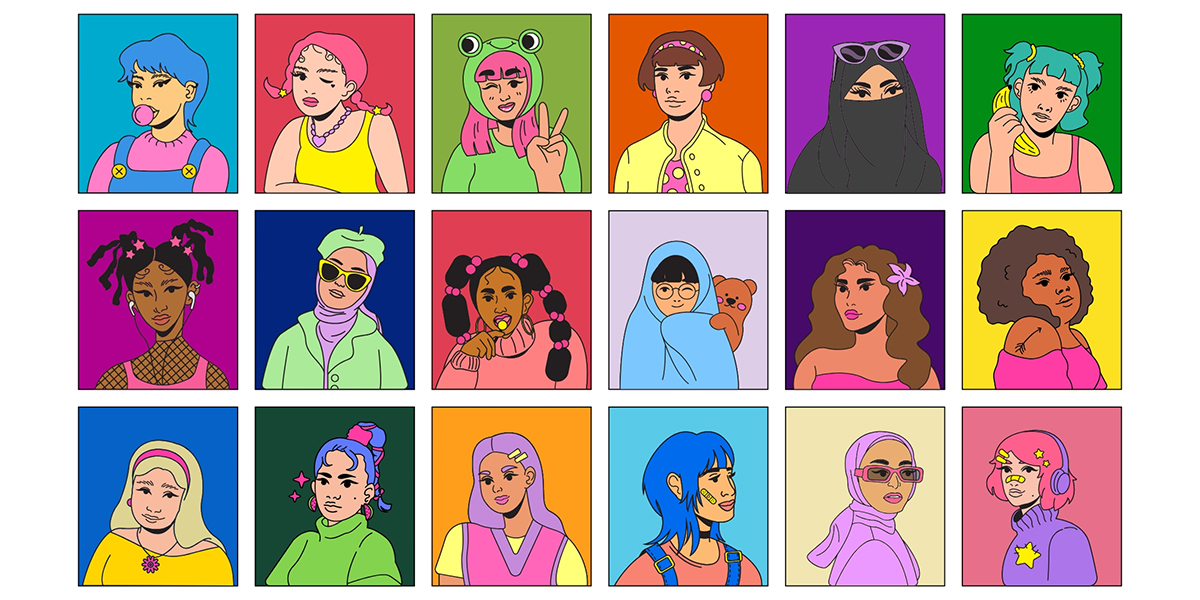
We all know the ritual. It is 3 p.m. on a Tuesday, and the brief has just landed. The objective is clear, but the target audience strikes fear into the heart of the agency. Gen Z.
The room goes quiet. The strategists nod. Then the reflex kicks in. The descriptors start flying around the boardroom. “Green ya purple hair.” “Bohat yo funky clothes.” “Sprinkle in words like ‘vibe,’ ‘flex,’ and ‘no cap.’” “They need to be dancing so it can be a TikTok challenge.” In that moment, we stop talking about human beings. We start talking about Gen Z.
When Gen Z Becomes a Caricature
Sitting there as a Gen Z creative with five years in the game, I realized exactly what disappears between the brief and the storyboard: reality.
I mentioned this frustration to a senior colleague recently, this obsession with painting my generation as neon-colored, slang-spitting aliens. They laughed and told me, “That’s exactly what people used to say about Millennials when we were trying to advertise to them ten years ago.”
It was the same script, different cast. Back then, Millennials were the ‘edgy rebels,’ with styles no one understood and attitudes that scared the establishment. It made me realize that when the industry doesn’t understand a group of people, it rarely tries to learn about them. Instead, it takes the path of least resistance, which is usually the laziest one.
Research from Ad Age and Campaign consistently shows that Gen Z is the most fragmented generation in history. We have ‘Granola Girls,’ ‘Corporate Baddies,’ ‘Gym Rats,’ and cottage-core enthusiasts. Yet in creative briefs, these nuances are flattened into a single, loud caricature: the rebel.
We take the most eccentric, fringe version of a demographic, the 1% living on the extreme edge, and decide it represents the entire 100%. We translate youth into rebellion, and digital native into someone who cannot speak in full sentences.
Looking around at my friends and peers, I rarely see the caricature. I don’t know many people who look like the mood boards we build, and I don’t know anyone who speaks exclusively in TikTok comments.
Digital Dialect vs. Real-Life Language
That’s when I realized there is a fundamental misunderstanding in boardrooms about how Gen Z actually speaks. The language we use on TikTok, Instagram, or even WhatsApp stickers, the ‘it’s giving,’ the ‘no caps,’ and the ‘brain rot’, is a digital dialect. It is performative, ironic, and context-dependent. But when I walk into a grocery store, I don’t say, “High key, I need a pani ki bottle that is giving energy.” I simply ask for water.
When brands take this digital dialect and force it into linear scripts, they ignore context. They lift language from niche internet subcultures and paste it onto mass-market billboards. It’s cringey and linguistically incorrect. We don’t speak in hashtags. We don’t speak in ‘internet.’
The tragedy of this translation error is that the work suffers. The moment ‘Gen Z’ hits a brief, the instinct is to make the voiceover rap. Around 2018, the industry saw Young Stunners blow up and Burger-e-Karachi hit a nerve. The takeaway across marketing departments in Pakistan seemed to be: the youth love rap; let’s make everyone rap.
We start throwing in slang until the script reads like a parody. We try to ‘yo-ify’ everything. In doing so, everything starts to look the same, a sea of loud, colorful noise.
We operate under the assumption that just because someone was born after 1997, they are immune to basic human truths, as if Gen Z doesn’t care about humor, storytelling, or emotion. As if the only way to get our attention is to scream ‘vibe check’ in a neon font.
What gets lost in translation is nuance. We trade genuine insight for aesthetic stereotypes. The brands that win won’t be the ones using the most ‘fellow kids’ slang. They’ll be the ones who realize that Gen Z are just people, with jobs, worries, crushes, and bills, just like the Millennials before them.
There is also a massive, unspoken divide in how we consume content. On one side is Instagram Gen Z: curated, polished, and speaking a mix of Urdu and American pop-culture references. On the other is TikTok Gen Z: raw, hyper-local, and often creating the very trends Instagram adopts weeks later. We also need to stop pretending Pakistani Gen Z is a single person living in DHA or Clifton.
Yet in ads, we almost always cast the Instagram version. Some briefs deserve that treatment, but not all. We show a sanitized version of youth in cafés that could just as easily be in London, while ignoring the 19-year-old in Gujranwala running a drop-shipping business from his phone or the young mother in Karachi who is still Gen Z but navigating a completely different reality.
We translate aspiration so heavily that we lose relatability. Our portrayal of Gen Z becomes so performative that critiquing it gets you labeled a ‘fake Gen Z.’
More than a Costume
By treating ‘youth’ or ‘Gen Z’ as a costume you can put on an actor, brands miss the quiet reality. Most of us are worried about rent, exhausted by inflation, and looking for stability. Where is that person in the ads? Why is Gen Z in commercials always partying with a guitar in a cafeteria, when in reality they are more often just trying to nap?
And the cycle won’t stop with us. I look at my younger cousins, Gen Alpha, and I’m already lost. I don’t understand Skibidi Toilet or why 6/7 is peak comedy. I see them treating TikTok like Google, and I feel my soul age five years.
But I hope I never mistake my lack of understanding for ‘insight.’ Just because their world looks chaotic to me doesn’t mean it lacks meaning to them. When I’m in the Creative Director’s chair, instead of panicking and stuffing them into a ‘brain rot’ box, I hope I have the decency to say, “I don’t understand this. Can you explain it to me?”
Because in ten years, one of those iPad kids will write an article just like this one, declaring the older generation clueless. We need to break this cycle of cringe before they grow up and cancel us all. Let’s treat audiences like humans, not science experiments. Not one size fits all. And if we don’t fix this translation problem now, the only thing truly getting lost in translation will be us.