
It’s D-day, and we’re all half-awake after the mad dash of last night. No, it wasn’t a party, but it was a blind-nighter at the office. You know the kind, where work isn’t over until the time to do that work arrives. Mismanaged, micro-managed, and often sparingly managed, with the last ones standing grasping at anything that might get the deck over the finish line.
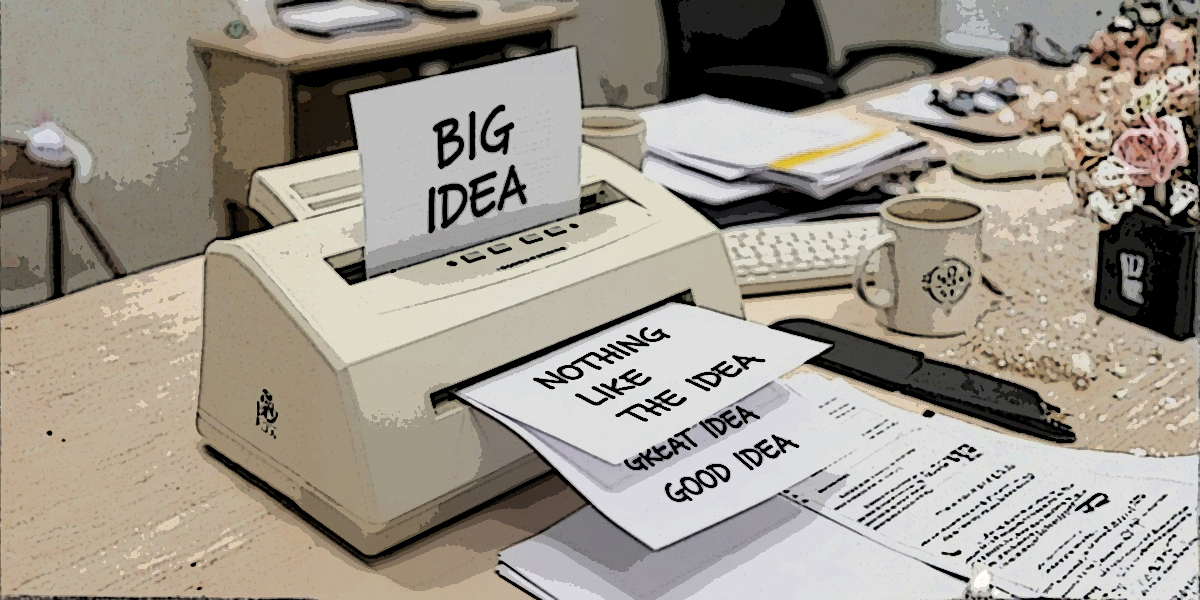
So here we are, presenting work that has become an unrecognizable brainchild (what I really want to say is brainfart) of all the usual suspects around the table: a slice of the MD’s ego (“I know what the client wants!”), a dash of the Account Director’s travel wish list (“Let’s shoot this one in Portugal!”), a knob of the CCO’s whims (“I’ve always wanted to try this execution”), a severely reworked strategy walk-up (tut – because it just wasn’t connecting to the creative, how dare it?), a sprinkling of filler ideas salvaged from other, obviously unrelated, dead decks, and then there’s the ghost of the original idea. The one that was actually on brief.
Yes, the setting looks unassuming, but let’s call it what it is: a badly made horror movie with effective jump scares. Thankfully, I’m done with horror movies, at least this kind, and will never have to live through this particular scene again.
What you just witnessed (and if you work in advertising, you’ve likely endured it firsthand) is pure chaos. And yes, the advertising industry is no stranger to chaos: departmental misalignment, last-minute changes, conflicting subjective feedback (the ‘mazaa nahin aya’s and ‘not impactful enough’s), endless iterations. These are often worn like a badge of honor, as if confusion is proof that something interesting is happening.
It isn’t.
If you’re feeling physically uncomfortable reading this, as I am writing it, then we agree: chaos is not creativity.
As a left-brained creative who never loses sight of strategy, I’ve spent enough time at odds with this industry to know where creativity truly dies. It happens somewhere between the brief and the final output, when the original intent quietly slips away. Not all at once. Not dramatically. But bit by bit, through endless rinsing and repeating, until the intent no longer means what it was meant to.
The real culprit is misalignment. When clear, well-meaning intent passes through people, power, and processes that are fundamentally unaligned, what gets lost in translation isn’t creative firepower; it’s strategic clarity. Creativity never stood a chance in that mess to begin with.
A Clear North Star
When our company was born, my co-founder Daniah and I decided it was time to put an end to the chaos and find a method to the madness we’d lived through in advertising. We called our baby ANDTHE NERVE! not just as a name, but as a stance. It represents the audacity to do things effectively and with absolute clarity.
Our north star is strategic defiance. What that means is simple: when we set out to do the work, our strategic intent is clear, unwavering, and, yes, almost stubborn. We are always solving a business problem for the client, and we refuse to lose sight of that. (And you’d best not try to sway us.)
This is not a place for vague intent. If you’re looking for that kind of flexibility, there are plenty of other doors to knock on in this industry.
Brand > Ego
We’ve all seen it: oversized egos giving birth to oversized, money-draining campaigns. Feedback becomes opinion-based. Work gets made on whims. Media is bought, invoices are paid, and yet you’re no closer to solving the brand’s problem than when the brief first landed in the inbox.
Because the moment ego enters the room, objectivity leaves it.
Without objectivity, creativity turns into an exercise in taste rather than a tool for impact. Ego replaces clarity with control, and as an idea passes through colliding egos, it stops performing and starts behaving. And no one wins awards, or results, for that.
So, we put the brand above our egos and hold on to objectivity like a lifeline. In dark, choppy waters, it’s the only thing that keeps the ship anchored.
Cut The Fat
Whether it’s unnecessary hierarchies or cumbersome processes, we have zero tolerance for wasted time. We work in lean teams with clear roles, curating expertise so everyone knows exactly what they’re responsible for.
The people we bring on share our vision, which means there’s no risk of intent getting murky along the way. We cut loose ends early, read: freeloaders, so there’s no “joining the meeting just for brownie points.”
To wrap this up, strategic defiance isn’t rebellion for its own sake. It’s the disciplined refusal to let intent become negotiable. It’s defending the why even as the what evolves. Saying no to misalignment. Re-anchoring decisions to strategy, again and again, even when it’s inconvenient.
True creativity lives in the tension between imagination and discipline. When intent is protected, creativity doesn’t just survive translation; it gains strength from it.
What I’m saying is this: we’ve cracked a method to the madness. And it works.
Hira Mohibullah is co-founder and Creative Lead at And the Nerve! hira@andthenerve.com