

It’s always the same brief: we’re targeting Gen Z. And then the brand teams proceed to tell you exactly how Gen Z supposedly operates.
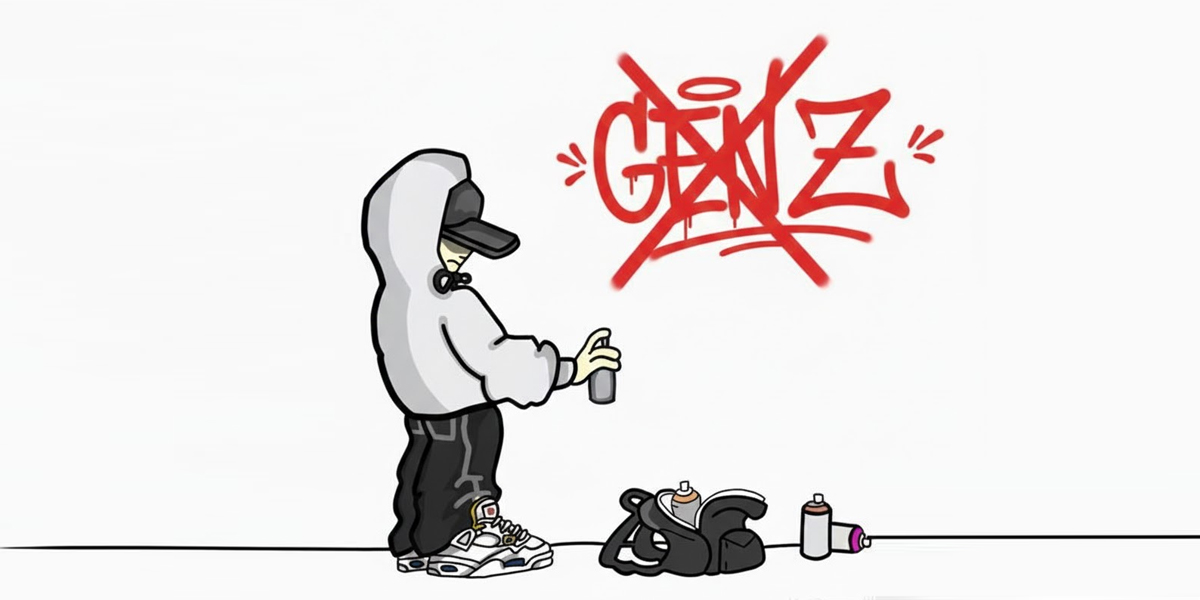
Earlier, I used to assume these insights were backed by research, focus groups, or at least some form of structured learning. But time after time, I received the same instructions: show a college, show a kid with an afro doing a backflip, kids doing graffiti, skateboarding through campuses.
Wait a minute.
I grew up in Karachi and Lahore, and I’m an NCA graduate. It’s safe to say I never saw kids doing graffiti in colleges. What I did see were students making sculptures, doing assignments, collaborating, and helping each other out. Yet somehow, graffiti became the dominant visual shorthand for Gen Z. Especially the kid with the afro. I’d see talent decks from agencies, and the client would pick the same guy again. And again. And again.
I slowly realised that I, too, was becoming part of the problem.
I was agreeing to whatever brand managers were feeding me. I was running my own firm, yet still falling into the trap of paisa de do, jo dikhana hai dikha denge. That’s when I decided to step away from the advertising industry entirely and take a two-year hiatus to teach.
Why teaching?
Because if I was someone who gave strategies and solutions to brands, it was time I applied that same thinking to myself. Teaching was a strictly strategic move. I needed to understand Gen Z not through a performative focus group – where participants are subtly pushed toward outcomes brands already want – but by actually spending time with them. I decided to infiltrate Gen Z.
Being a petite 4’11” woman, my voice has often been challenged because of how small I look. This time, I chose to use that perception to my advantage. I joined my own college, NCA, as a third-year visiting faculty member in Visual Communication Design. My objective was simple: to be the teacher I never had.
I didn’t just pass on professional knowledge; I created safe spaces. Soon, conversations expanded beyond design into mental health, relationships, finances, and life in general. I wasn’t just mentoring them professionally – I was mentoring them as people.
Before I knew it, I was offered a visiting faculty position at BNU, and then students from all three SECs were coming to me. I listened, guided, assigned projects, and helped them navigate professionalism. Eventually, I had the opportunity to teach at the LUMS CES program, where my target group expanded dramatically – SEC A, B, and C, ages 20 to 50, men and women. We discussed work, personal goals, struggles, and achievements. There were debates, disagreements, and growth on both sides.
I wasn’t spying – but I was observing.
I would show ongoing campaigns targeted at Gen Z, and more often than not, I’d be asked to stop midway through a TVC, an anthem, or a thematic execution.
“Ma’am, what are you showing us?”
The truth was uncomfortable: most of these students hadn’t even seen the “anthem” that I knew an MNC had spent hundreds of thousands of dollars pushing. Worse, they didn’t care.
After two years, I stepped back into the industry. And this time, the tables had turned.
When clients now make assumptions about Gen Z, I respond with: let’s research. I have a cohort of over 200 Gen Z students who can help us verify these assumptions. This not only allows students to earn, but it also gives my clients clarity – and gives me confidence in my decoding of Gen Z.
There’s a persistent belief that Gen Z is all about fun, hip-hop, and trends. Look closer. That version exists largely for social media. In reality, they struggle – often more intensely than millennials. Yes, they create trends, but not all of them are rooted in doom-scrolling. Many are actively practising digital detox, zero grids, and JOMO.
Even I was stunned by this until I asked the right questions. JOMO – the Joy of Missing Out – means the flex has shifted. Being everywhere is no longer impressive. Being unavailable is. Staying home, engaging in a solo hobby, and not documenting it is now seen as a sign of mental confidence.
Gen Z was never that difficult to crack. Nobody simply made the effort to sit down and talk to them.
They hate bikao ads. They largely hate ads altogether. But they love storytelling – just not the manipulative, tear-jerker kind. They want to be entertained. They want to be heard. They want to be seen in their authentic selves. Yet even when brands attempt research, it’s often done mechanically, without empathy or real listening.
You may question my own data-gathering methods – sure, dinosaur times. Yes, it’s a Google Form. But when I reach out to my Gen Z cohort, they know me. There’s trust. They know this isn’t a faceless survey – it’s Ma’am Huma asking for honesty. That’s how I learn that while coffee houses may seem trendy and profitable, they’re still considered a fad by many Gen Zs: expensive, performative, and not truly authentic.
Take another example. I once cracked a tea-based Gen Z idea with one of my students. When I approached leading tea brands, the response was laughable. A brand representative confidently claimed Gen Z doesn’t drink tea – they drink coffee.
The entire class of 40 students burst out laughing.
So if some kids go to coffee cafés, does that mean every Pakistani Gen Z is spending Rs. 700–1200 on a beverage? These are the kinds of lazy assumptions that keep getting recycled at the top.
Today, I sit in a position of power and understanding. My goal is to ensure this generation doesn’t get lost in translation. It’s still a long road. While clients begin to understand when I debunk their theories – and especially when I bring my students in to speak directly to them – changing entrenched thinking takes time.
For now, my work is focused on one thing: filtering out the bullshit assumptions and forcing brands to rethink what they think they know.