
‘Lost in translation’ is often treated as a communication failure, as if the problem is language, clarity, or simply not listening hard enough. But that diagnosis is shallow. Translation doesn’t fail because people don’t understand each other. It fails because the intent to do great work erodes over time.
Clients and agencies are rarely misaligned on the destination. Everyone wants the same thing: work that matters, work that works, work that earns its place in both culture and business. The why is not broken. No one needs reminding why fame matters, why growth matters, or why sales matter. Those are givens. What breaks is the path. More specifically, what breaks is the sanctity of the work as it moves through process, pressure, and people.
If being “lost in translation” is the symptom, then the cure is not better briefing. It’s protecting great work long enough for it to exist. There are four beliefs that consistently show up wherever strong work survives.
The first belief is this: the brief cannot be treated as a handoff.
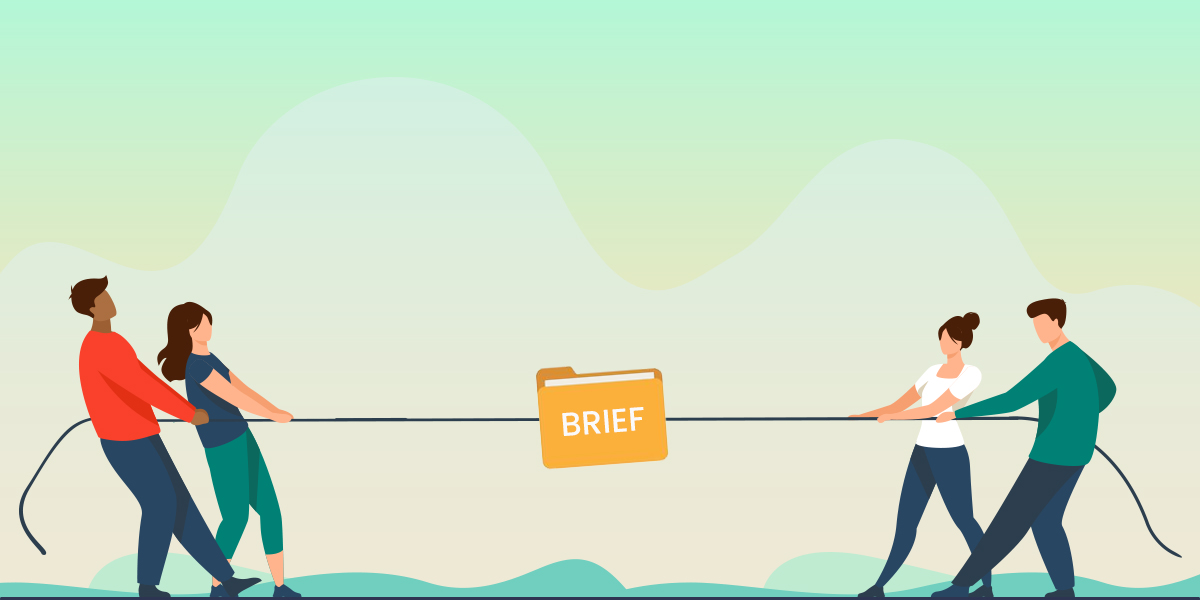
Average work begins the moment the brief leaves the room. Great work begins when it doesn’t. In the strongest client–agency relationships, the brief is not something that gets passed over and awaited. It’s something that stays alive on both sides.
When the brief becomes a document rather than a commitment, it starts to mutate. Stakeholders reinterpret it. Fear reshapes it. Convenience trims it. By the time ideas arrive, everyone is responding to a slightly different problem. Nothing dramatic happened. Nothing obviously went ‘wrong.’
Great work avoids this not by adding more process, but by staying close. Clients remain engaged – not to steer execution, but to protect the original ambition. Agencies share thinking early, not to seek permission, but to ensure the work is still solving the right problem. The ball is never passed. It’s carried together.
The second belief is that trust is not emotional; it’s structural.
There’s a quiet truth in advertising that both sides know but rarely admit. Clients often wonder if agencies are truly doing their best work. Agencies often wonder if clients will ever let the best work through. Both doubts coexist. Both remain unspoken. And both usually surface late, disguised as ‘feedback.’
Strong work environments don’t rely on blind trust. They make the rules visible early. Not rules of taste or brand language, but rules of decision-making: what kind of risk is acceptable, what kind of bravery is desired, and what kind of compromise is fatal.
When judgment is aligned early, disagreement becomes productive instead of political. Translation doesn’t fail because people disagree. It fails because they disagree too late, after the meaning has already been lost.
The third belief is one Sir John Hegarty has articulated more clearly than most: a brief must earn the right to exist.
Weak briefs aren’t unclear; they’re overprotective. They try to account for every stakeholder, every outcome, every possibility. In doing so, they remove tension, and with it, possibility. They are safe. And safety is rarely the foundation of great work.
The best briefs are challenged, pulled apart, and rebuilt, emerging with intent sharpened rather than diluted. They are arguments, not summaries. They make a choice about what matters most and accept the consequences of that choice.
Great work comes from respecting the problem enough to fight for its truest expression.
And finally, there is a belief that sits uncomfortably with creative ego: walls don’t protect ideas; they suffocate them.
There’s a seductive myth in advertising that great ideas need isolation, that creativity improves when shielded from clients, from questions, from interference. Sometimes that instinct comes from insecurity. Sometimes from arrogance. Often from both.
But work that lasts rarely emerges from secrecy. It emerges from openness. From letting go of the need to appear brilliant and choosing instead to be understood. From allowing conversations to happen early, while ideas are still fragile enough to improve.
Lowering those walls means trusting that clarity strengthens creativity rather than diluting it. When ego steps aside, the work gets better. Great work doesn’t need better language. It needs continuity, courage, and care.
Moiz Khan is Creative Director, Edelman EMEA.